Do you recognize yourself?
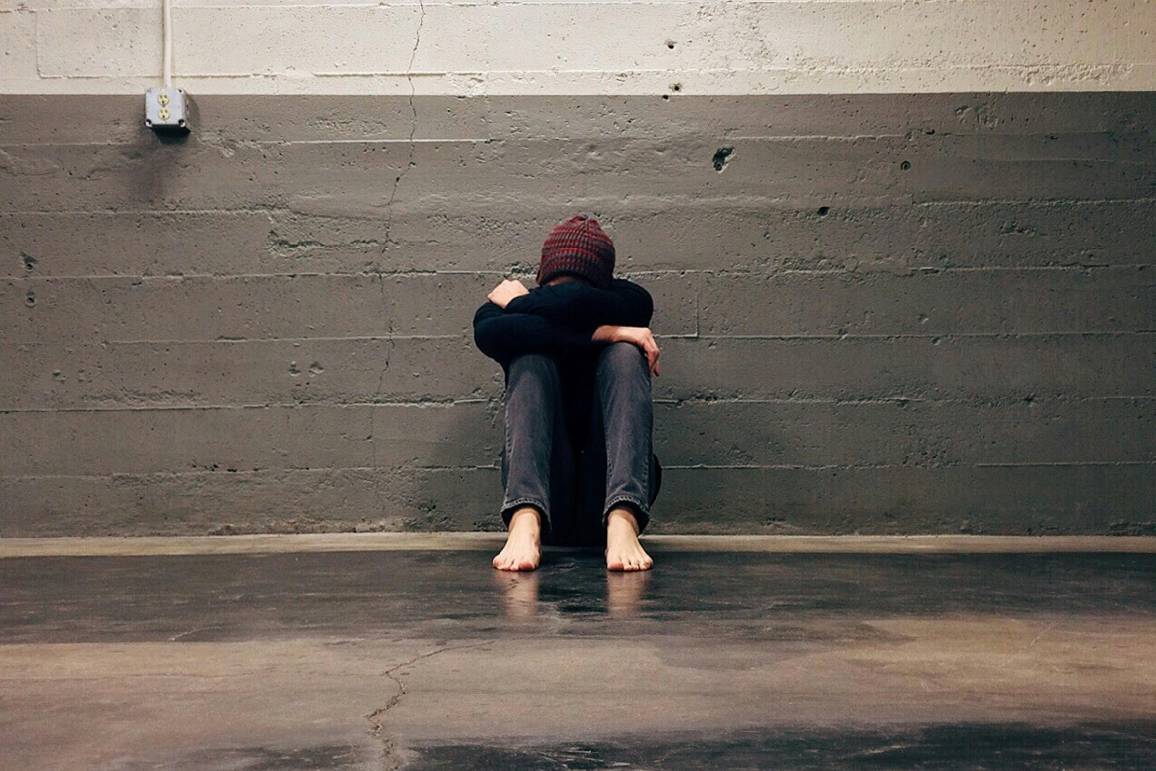
You know crises, right? "F***!! What do I do now?"—helplessness, hopelessness, hardly anything but problem-thoughts, mixed with fear, anger, and dejection. A hole we have to work our way out of... Caught in the middle, we quickly become our own worst enemy, make mistakes, make decisions we later regret, and dig ourselves even deeper, until we finally see more clearly again, find ourselves, and things slowly start to improve.
And you also know the long aftermath. We're functioning again and have our lives more under control—and yet we feel exhausted. Like a shadow of what we were just a few months ago. Emotions, thoughts, and uncertainty still circle and dominate us. On one hand, we want to deal with what we've experienced; we sense that processing would be important and valuable. On the other hand, we want nothing more than to close the chapter, forget, and get back to life as quickly as possible. This time is also challenging, and it's what largely determines how we truly emerge from the crisis—what doesn't kill us can make us stronger, or leave deep scars.
Have you also consciously noticed the influence of old wounds and their imprints? A situation, a sentence, a look—and suddenly something tips inside us. Fear, anger, insecurity, sometimes even dizziness—not like a slowly awakening fire, but rather "triggered" like an oil fire. Sometimes it feels like something is pulling us back to a forgotten time, to an old self. Sometimes it's long been part of our everyday life and what we consider "our self." Sometimes we know exactly where it comes from, sometimes we have no idea why we react this way... Only afterward the questions: "Why does this affect me so much? I don't want this! Should I accept this as part of me forever, or can I separate from it, leave it behind?"
You will learn...
The entire process—or rather the many individual processes that interlock—are well researched. With the right knowledge and functioning tools, you have the power to help yourself.
Part 1: Acute Crisis
When the storm rages: gaining stability, becoming capable of action. You will learn:
- to understand what's happening inside you right now—the psychological, physical, and neurobiological processes behind crises are well researched. Just knowing about them takes the ground back from under the chaos.
- personal quick aids and state management—breathing, body, and attention techniques that work anywhere: as emergency strategies in the hardest moments and for daily emotional handling.
- to avoid mistakes and hasty decisions—to recognize traps we fall into precisely when we're weakened. And to see what you do NOT need to decide, change, or solve right now.
- to regain self-care and stability—not "pull yourself together," but: what your system needs right now to regain footing.
- to organize good external support—whom you confide what in, where you get what, and when professional help is the more honest path.
- a competence that stays—for this crisis and for every future one. You leave the program with a toolbox and a self-understanding that also carries you when the next time comes.
A quick program for you, because I know it's urgent! That's why I also strive for the fastest possible appointments here (within a few days), and you'll receive initial supporting materials after the free initial conversation—completely non-binding—to help you through those first few days! 🫶
Part 2: Stability & Processing
When the first storm has passed but the aftermath remains: making sense of it, instead of just pushing it down. You will learn:
- to significantly shorten the natural crisis and processing process—those who know and understand the process and path can consciously and purposefully walk it, instead of searching for trails and clearings in the forest.
- reflection techniques that help you discover what this time has done to you, without losing yourself in it—in writing, physically, in conversation, or in silence.
- methods and tools for conscious and relieving processing—the crucial difference between an unwillingly formative crisis and an integrated, instructive experience from which you've grown.
- to consciously switch between processing time and everyday strength, without slipping into repression—and how to notice when something truly comes to rest, instead of just sinking deeper and continuing to work from there.
- to separate, locate, and work through your emotions—instead of experiencing them as one large, impenetrable tangle. Each of these feelings wants to be understood and handled differently, and that makes the crucial difference.
- to slow down the thought carousels that keep you spinning in circles long after the acute phase—and why simply "not thinking about it anymore" only makes them stronger.
- to relieve and rebalance your body and your nervous and energy system—with mindfulness- and body-based tools that release tension where it has settled.
Part 3: Processing & Integration
When old wounds have a say: discovering the roots and resolving them deeply. You will learn:
- to recognize and decipher triggers and patterns—those moments when something tips inside you. And your recurring behaviors and decision drivers—the helpful as well as the hindering ones. What's actually behind them? How do they interlock?
- to uncover beliefs and old, lingering imprints and understand them in connection with your past and your current patterns—the true working level for real, sustainable change: at the origin, not at the symptom. This is where the recurrence of the same dead ends in relationships, communication, self-worth, and attachment ends.
- to distinguish what you want to actively process and what you may let go—without ever having fully "understood" it. Not every wound needs an explanation.
- in-depth approaches and methods for conscious self-work—mental, emotional, somatic, energetic—getting to know them, trying them out, training, you recognize and choose what fits you—no paradigm is imposed on you.
- HOLISTIC integration of your personal self-work—what it means and does for you to combine mental, somatic, energetic, emotional, and breathwork, as well as the shift between uncovering, processing, and balancing.
- the holistic integration of your self-work—what it means and does for you to combine mental, emotional, somatic, energetic, and breathwork. And to guide the shift between uncovering, processing, and balancing so that everything works together for you.
- to recognize warning signs and avoid reopening old wounds—the art of not breaking them open directly, but working on them indirectly and in safe oscillation between today and back then.
- to meet yourself with compassion instead of harshness—we quickly become impatient and dissatisfied with ourselves in processing. Self-compassion is not a soft add-on, but a central protective and stabilizing factor.
- to navigate consciously and safely between self-work and external support—what's possible in self-work, where limits lie and caution is needed, what powerful support you can find externally both privately and professionally, and when and how these are meaningful and important.
- how processing and integration actually unfold—understanding the process, the waves, and the realistic prospects lets you stay committed, stay empathetic with yourself, and also recognize when it's time to stop digging and live in the here and now.
- to recognize what your wounds have also given you—sensitivity, empathy, depth, awareness for others. These strengths grew in the same soil as the pain. Processing doesn't mean discarding them—but releasing them from their necessity and freely choosing what you use them for.
Scope & Investment
Part 1: Acute Crisis:
- Individual: ~ 2–3 sessions*)
This part is ONLY AVAILABLE AS INDIVIDUAL TRAINING! The reason is simple: You're in crisis NOW and that can't wait for the next program start. That's why I strive for the fastest possible appointments in cases of acute crises (within a few days), and you'll receive initial supporting materials after the free initial conversation—completely non-binding—to help you through those first few days! 🫶
Part 2: Stability & Processing
- Individual: ~ 3 sessions*)
- Group: 3 modules (Prerequisite: At least 1 individual session on crisis for the necessary foundations)
Part 3: Processing & Integration
- Individual: 7–10 sessions*)
- Group: 7 modules (Prerequisite: Part 2 completed, or at least 1 individual session for the necessary foundations)
Important Points About the Program
A Word Between Crisis & Life Change
Crises are often followed by change, but please be aware that these two topics are different and the strongly present "away-from" and "toward" motives interact extremely critically. Making decisions for your future life directly out of a crisis carries the risks of seeing the situation with strong bias, overcompensating, or hastily grasping at opportunities that present themselves out of a need for security. Sure, the latter could also be great luck in misfortune, but please be careful and talk to people who know you and whose honest outside perspective you trust.
If at all possible: first reach a stable position, then process, and THEN approach your life change calmly and thoughtfully! So at the earliest during Part 2 (Stability and Processing). There's no urgency, however, to prioritize processing your past over life change in the here and now. Rather, change in your life can support your processing if you take that into account accordingly in your change. Just ask me about it! :)
Important Professional Distinction
I clearly distinguish my areas of expertise and activities from the fields of medicine, psychotherapy, and life and social counseling. This is especially important for this program, as it deals with crises and old wounds. With me, you learn self-help and the competence for self-work and self-healing. This energetic and mental work serves to activate self-healing powers and does not replace diagnosis or treatment by a doctor. If you're seeking active counseling/assistance for specific elaboration/processing of your problems and life issues and/or struggling with serious psychological burdens such as depression or trauma or mental illnesses, these are your primary fields and points of contact. If you're unsure, let's talk about it. Likewise, should topics arise in our work together for which you need active help, we'll discuss that. Depending on the topic, I can also gladly connect you with suitable colleagues from my network, while we pause or continue our training alongside. Please never hesitate to mention the emergence of overwhelming topics.